

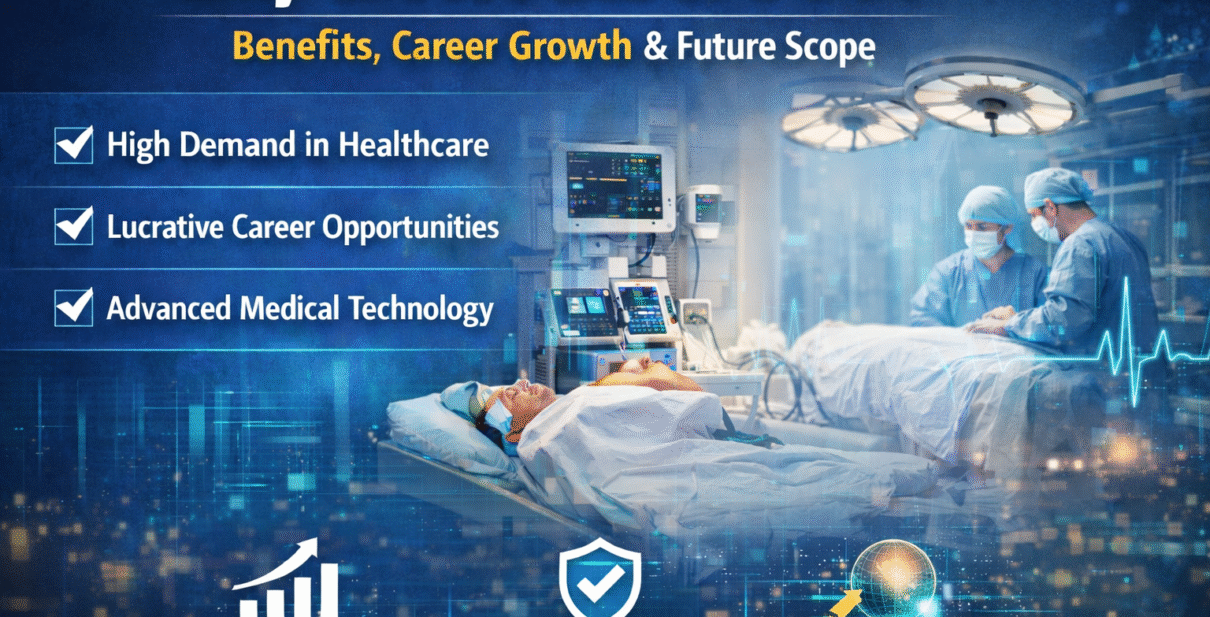
The healthcare sector is one of the fastest-growing industries globally, and with advancements in medical science, the demand for trained professionals working behind the scenes in surgical procedures is rising rapidly. One such highly respected and rewarding career option is B.Sc. Operation Theatre Technology (B.Sc.OTT).
While doctors and surgeons are recognized as the main pillars of medical care, Operation Theatre Technologists play a crucial role in ensuring safe, accurate, and efficient surgeries. Without them, even the most highly skilled surgeon cannot perform their best.
So, if you are passionate about contributing to life-saving treatments and want a healthcare career without going through long years of MBBS or MD, B.Sc. OTT could be the perfect choice for you. This blog explores the benefits, career growth, and future scope of B.Sc. Operation Theatre Technology in depth.
What is B.Sc. Operation Theatre Technology?
B.Sc. OTT is a 3 to 4-year undergraduate degree that trains students to assist surgeons, anesthetists, and nurses during surgical procedures. The course focuses on operation theatre management, surgical instruments, patient care, infection control, and anesthesia equipment handling.
Key skills you learn:
- Handling advanced surgical instruments and machines
- Maintaining sterile environments inside the OT
- Monitoring patient vitals during surgery
- Assisting surgeons and anesthesiologists
- Managing emergency and trauma procedures
- Understanding surgical positioning and pre/post-operative care
Students gain both classroom knowledge and hands-on training through clinical internships in hospitals.
Why Choose B.Sc. OTT? — Top Benefits
High Demand in Healthcare
Almost every hospital, surgical center, trauma center, and specialty clinic requires operation theatre technologists. With increasing surgeries due to accidents, lifestyle diseases, and medical advancements, career opportunities continue to grow.
Short Duration & Quick Employment
Unlike medical degrees that take 7–10 years, a 3–4 year B.Sc. OTT course enables you to enter the healthcare field early and start earning faster.
Direct Contribution to Life-Saving Surgeries
You work inside the Operation Theatre, assisting critical procedures like:
- Transplants
- Cardiac surgeries
- Neurosurgery
- Orthopedic operations
- Emergency surgeries
Your contribution helps save lives every day – a job filled with pride and purpose.
Attractive Salary & Job Security
Healthcare jobs are among the most stable globally. Salaries increase consistently with experience, specialization, and working in multi-specialty hospitals.
Excellent Growth Opportunities
Operation Theatre Technologists can take on roles such as OT Manager, Surgeon Assistant, Supervisor, or shift into specialized surgical areas to grow faster.
Opportunity to Work Abroad
Countries like the UAE, UK, USA, Canada, Australia, and Germany have huge demand for skilled OT technologists and offer high-paying jobs with great benefits.
Best BMRIT College In Dehradun
Career Options After B.Sc. OOT
After completing B.Sc. Operation Theatre Technology, graduates can work in various departments such as:
- Operation Theatres
- Emergency & Trauma Units
- Intensive Care Units (ICU)
- Labor and Delivery Rooms
- Pathology and Diagnostic Centers
Popular Job Roles Include:
- Operation Theatre Technologist / Technician
- Anesthesia Technician
- Surgical Assistant
- OT Coordinator
- Infection Control Officer
- Emergency Care Technician
- Clinical Instructor/Trainer
- Medical Equipment Maintenance Specialist
- OT Manager or Supervisor
Work Environment & Responsibilities
As an OT Technologist, your daily responsibilities include:
- Preparing the operation theatre before surgery
- Sterilizing instruments and equipment
- Ensuring patient positioning and safety
- Assisting during surgeries by providing tools and maintaining sterile fields
- Monitoring and checking life-support systems
- Post-operative care and safe handling of instruments
This profession requires a strong presence of mind, teamwork, precision, and discipline.
Skill Development During B.Sc. OOT
The course helps you develop:
- Technical Skills — surgical instruments, anesthesia machines, patient monitoring
- Clinical Skills — handling emergencies, assisting doctors
- Soft Skills — communication, teamwork, empathy, stress management
- Administrative Skills — OT scheduling, equipment inventory, documentation
These skills make you capable of handling high-pressure environments effectively.
Salary Packages After B.Sc. OOT
Salary depends on experience, hospital type, city, and specialization. Here is a general overview:
| Experience Level | Job Position | Average Salary (per month) |
| Fresher | OT Technician | ₹20,000 – ₹35,000 |
| 2–5 years | Senior Technician / Specialist | ₹35,000 – ₹60,000 |
| 5+ years | OT Manager / Supervisor | ₹50,000 – ₹1,00,000+ |
| Abroad | Technologist | ₹2,00,000 – ₹4,00,000+ |
Freelancing and working in private surgical centers can also increase earnings further.
Higher Studies & Specializations After B.Sc. OOT
To grow faster, students can pursue advanced studies such as:
Postgraduate Courses
- M.Sc. Operation Theatre Technology
- M.Sc. Anesthesia Technology
- M.Sc. Critical Care Technology
- Hospital Administration (MHA/MBA)
- Postgraduate Diploma in Perfusion Technology
Specialized Certifications
- Cardiac OT Technology
- Neurosurgery OT Technology
- Laparoscopic Surgery Training
- Emergency & Trauma Care
- Infection Prevention & Control
Higher qualifications = Better salary + Leadership opportunities + Global placements
Future Scope of B.Sc. OTT
The future of this field is promising due to:
- Increasing population & healthcare demand
- Growth in specialty hospitals & medical tourism
- Surge in robotic and minimally invasive surgeries
- More surgeries for heart, organ transplants & cancer treatment
- Government focus on healthcare infrastructure development
Technologists with expertise in robotic surgery, advanced monitoring, or instrument sterilization are expected to be highly valued in the coming years.
 Apply Now
 Fee Payment
 Admission
 Enquiry
 Quick Links