

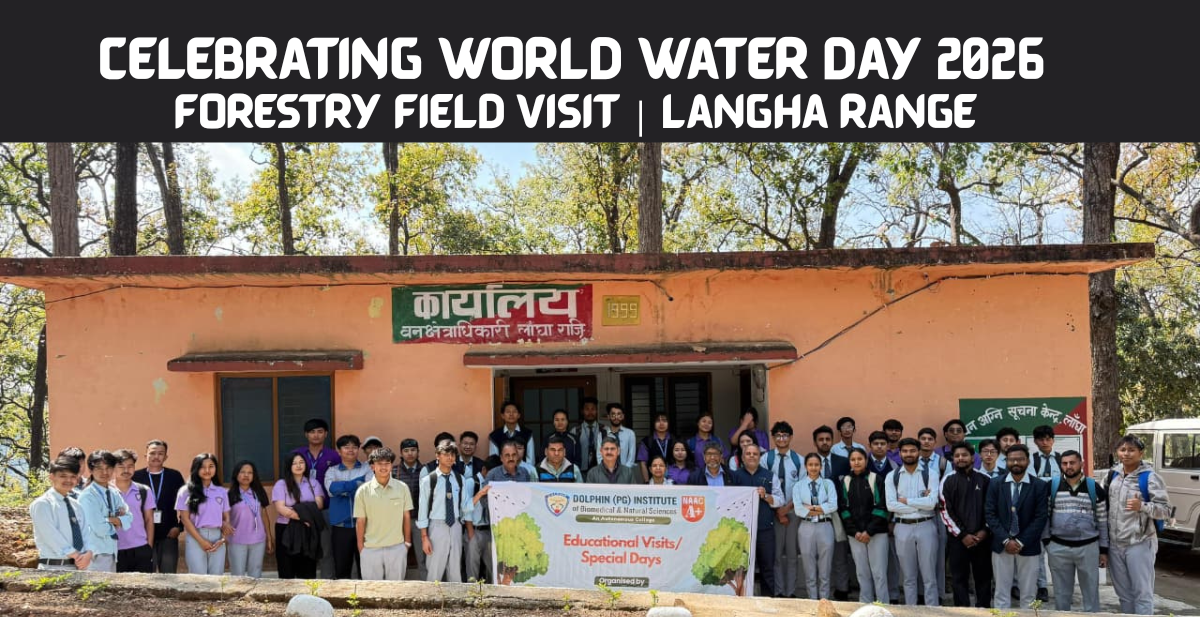
Celebration of World Water Day (22 nd March 2026)
“Save Water Today, Sustain Forests Tomorrow.”
The Department of Forestry at Dolphin PG Institute of Biomedical & Natural Sciences celebrated World Water Day on 23rd March 2026, as 22nd March was observed as a holiday. The celebration aimed to raise awareness about the importance of water conservation and sustainable management of natural resources among students.
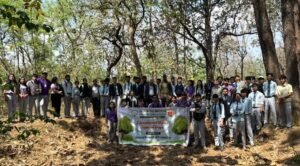
Field Visit to Langha Range, Kalsi Forest Division
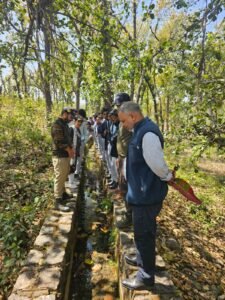
As part of the celebration, a field study was organized to the Langha Range under the Uttarakhand Forest Department. All students and faculty members along with field staff visited Langha Rnage. The Langha Range is characterized primarily by Tropical Dry Deciduous Forests, which are typical of the lower Shivalik region of Uttarakhand. These forests experience a distinct dry season, during which many trees shed their leaves to conserve moisture. The dominant vegetation includes species like Sal (Shorea robusta) along with associates such as Khair (Acacia catechu), Shisham (Dalbergia sissoo), and various shrubs and grasses. The forest structure is moderately dense, with a mix of natural regeneration and plantation areas. Soil moisture conservation (SMC) activities, such as check dams and water harvesting structures, play a significant role in improving vegetation growth and regeneration in this range. As a result, areas with such interventions show healthier forest cover compared to nearby untreated patches.
Overall, the Langha Range represents a vital example of how dry deciduous forests can be sustainably managed through proper conservation practices. During the visit, students of the Department of Forestry were addressed by the Range Officer Shree Jitendra Singh Gusai and Forester Shree Rahul Joshi of the Langha Range. They highlighted the critical importance of soil moisture conservation (SMC) in maintaining forest health and ensuring water sustainability.
Students gained practical exposure with Forester Shree Rahul Joshi to various soil and water conservation techniques, including:
- Formation of water harvesting ponds
- Construction of different types of check dams
- Role of plantation activities in conserving soil moisture and improving groundwater recharge
The field observations clearly demonstrated that forest areas where SMC activities had been implemented showed significant regeneration and healthier vegetation compared to nearby forest areas lacking such interventions. This provided students with valuable insights into the effectiveness of conservation strategies in real world conditions.
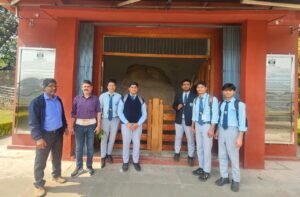
Visit to Kalsi Rock Edict
The students also visited the historic Kalsi Rock Edict, an important archaeological site. This visit added cultural and historical value to the field study, enriching the overall learning experience.
Conclusion
The celebration of World Water Day through this field-based learning approach proved to be highly informative and impactful. It helped students understand the practical significance of water conservation, soil management, and sustainable forestry practices. Such initiatives play a crucial role in developing environmentally responsible professionals committed to conserving natural resources.
 Apply Now
 Fee Payment
 Admission
 Enquiry
 Quick Links