

MSc in Physics is a two-year postgraduate programme designed to build advanced theoretical knowledge and practical expertise across the principal branches of physics. The curriculum develops deep competence in classical, quantum, and statistical mechanics while integrating modern experimental, computational, and instrumentation methods. Graduates acquire laboratory proficiency, research experience, and scientific communication skills that prepare them for careers in research, industry, academia, technology development, and data-intensive roles.
Core areas you’ll study
- Classical & Mathematical Physics: Lagrangian and Hamiltonian mechanics, tensor analysis, differential geometry, continuum mechanics, and advanced electromagnetism.
- Quantum Mechanics: wave mechanics, quantum field theory basics, angular momentum, perturbation theory, and relativistic quantum mechanics.
- Statistical Mechanics & Thermodynamics: ensembles, phase transitions, kinetic theory, non-equilibrium processes, and information theory applications.
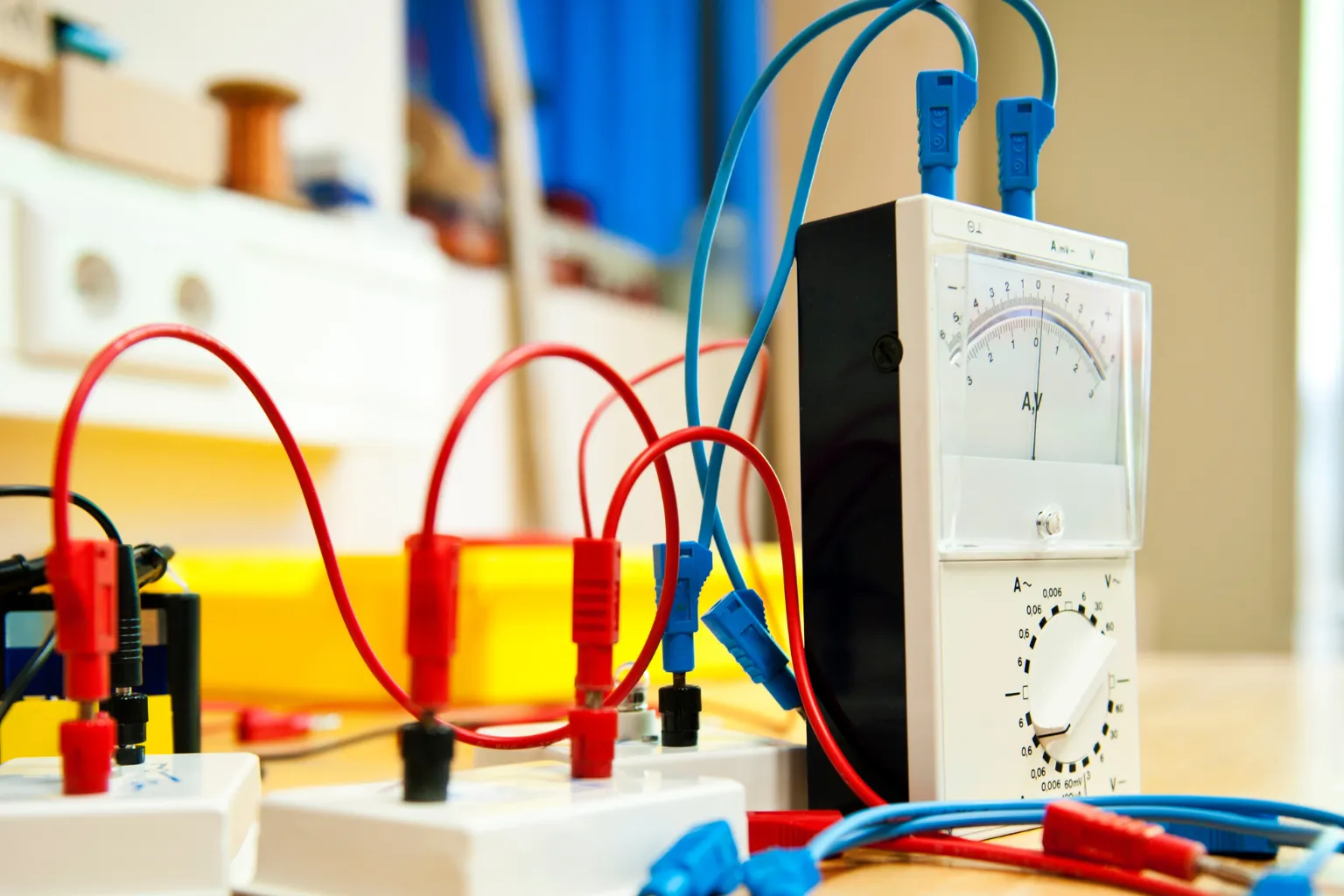
- Electronics & Instrumentation: digital and analog electronics, microprocessors, sensors, vacuum technology, cryogenics, and data acquisition systems.
- Computational & Theoretical Methods: numerical simulations, Monte Carlo methods, density functional theory for solids, MATLAB/Python programming, and machine learning in physics.
- Specialized & Applied Topics: condensed matter physics, nuclear and particle physics, optics and lasers, astrophysics, nanotechnology, and quantum computing.
- Interdisciplinary modules: computational biophysics, materials characterization techniques, and laboratory safety/radiation protocols.
Teaching, practical work & assessment
Teaching combines lectures, tutorials, and problem-solving sessions with extensive hands-on laboratory work. The first year emphasizes core theory and foundational experiments; the second year focuses on advanced lab techniques, elective modules, and an independent research project. Assessment includes written examinations, continuous evaluation (assignments/seminars), practical exams, project reports, and a dissertation with oral defense. Strong focus is placed on experimental design, error analysis, computational modelling, and scientific presentation.
M.Sc. Physics at Dolphin (PG) Institute, Dehradun
Dolphin (PG) Institute of Biomedical & Natural Sciences (affiliated to HNB Garhwal Central University) offers an M.Sc. Physics programme that balances academic rigour with industry relevance. The institute provides state-of-the-art laboratories (optics benches, spectrometers, oscilloscopes, vacuum systems), access to computational clusters for simulations, a well-equipped library, and comprehensive student support including hostel facilities. Faculty combine academic expertise with applied research in materials, electronics, and astrophysics; students pursue dissertation projects tied to faculty interests or industry challenges like sensor development and renewable energy tech. The programme prioritizes practical skills and employability for roles in tech R&D, instrumentation, and scientific computing.
Career path & typical entry salaries
Graduates pursue diverse roles in academia, industry, and government:
- Research Physicist / Scientist — national labs (TIFR, BARC), academic groups, or private R&D.
- Electronics/Instrumentation Engineer — semiconductor, aerospace, and medical device industries.
- Data Scientist / Computational Physicist — tech firms, AI/ML companies, and simulation roles.
- Materials Scientist — nanotechnology, semiconductors, and renewable energy sectors.
- Astrophysicist / Observatory Analyst — space agencies (ISRO) and observatories.
- Quality Control / Metrology Specialist — calibration labs and manufacturing.
- Teaching & Academic Research — lecturerships, Ph.D. programmes, and university positions.
Estimated entry-level salary (India): ₹3–5 lakh per annum, varying by sector and location. With 2–5 years’ experience or specialized skills (quantum computing, data analysis, instrumentation), salaries rise to ₹6–10 lakh; senior roles in tech/R&D can exceed ₹12–20 lakh or more. Government/academic paths follow structured scales with benefits.
Placements & industry connections
The placement cell engineers research stints, collaborative projects with premier labs, and onboarding by elite recruiters in tech/R&D. 6-month dissertations forge co-authored journals and orations. Faculty networks with IIT Roorkee, ARIES, PRL Ahmedabad, and DRDO yield mentorship and grants. Sponsored ventures in quantum sensors, astrophysics, and clean energy fuse knowledge with application for streamlined elite placements.
Top recruiters for M.Sc. Physics at Dolphin PG Institute
Dolphin PG Institute garners 350+ companies yearly for premium PG talent.
- Primary Recruiters (R&D/Tech/Space Focus)
- Space/Defense: ISRO, DRDO (DRDL/SSPL), HAL, Bharat Electronics.
- Atomic Research: BARC, IGCAR Kalpakkam, VECC Kolkata.
- Tech/Electronics: L&T Technology, Bosch Rexroth, Honeywell Tech.
- Renewables: ReNew Power, Azure Power, Adani Solar.
- Research Institutes: IIT Roorkee, ARIES Nainital, IIA Bengaluru.
- Advanced Tech: Infosys Research, IBM Quantum, TCS Innovation Labs.
Placement Highlights: 90%+ placement for M.Sc. programs; average package ₹6.5–9.5 LPA for research; top 10% clinch ₹11–15 LPA in R&D/space. Dissertation eminence unlocks superior placements and PhDs at flagship institutions.
Duration
- 2 years 4 semesters
Eligibility
- B.Sc. in PCM/PCB with minimum 45% marks in aggregate.
Future Prospects
Graduates in M.Sc Physics can find different technical jobs in public and private sector. There are many opportunities available for M.Sc Physics graduates in technical field. Many IT companies such as Infosys, Wipro and CTS are recruiting M.Sc Physics graduates for software jobs. They can also get jobs in Energy, Electronic and automobile Industry. There are vast opportunities available in Scientific Research and Development Organizations such as The Defense Research and Development Organization (DRDO), Physical Research Laboratory, Ahmadabad, Saha Institute of Nuclear Physics, Kolkata and Nuclear Science Centre New Delhi, besides a large number of other Govt. & PSU organizations.
Further Information
An Autonomous College
frequently asked questions
Holding an M.Sc. in Physics puts you in demand in ways you might not have considered when you decided to pursue an M.Sc. in Physics. Although, of course, there will always be opportunities in research with elite institutions such as ISRO, DRDO, and BARC, you should realize that the "problem-solving and mathematical modeling" you've learned will actually be your "secret power" in the business world. You might be working as a "data scientist" or "quantitative analyst" in financial institutions, where your talent in "decrypting hidden patterns in data" will be of utmost importance. Alternatively, with an emphasis in tech, you could be working in the burgeoning industries of semiconductor fabrication, renewable energy, and aerospace engineering. More interestingly, you might be working in the area of medical physics, in which you could apply your knowledge and training in helping design and administer these "high-end" radiation therapies. Truth be told, you will not be limited to "just" "being" a physicist.
Top Career Sectors for Physics Graduates
| Sector | Common Job Roles |
| Research & Govt | Scientist (ISRO/DRDO), Scientific Officer, Lab Technician |
| Technology | Data Scientist, Software Engineer, Systems Analyst |
| Healthcare | Medical Physicist, Radiology Specialist, Clinical Researcher |
| Corporate/Finance | Quantitative Analyst (Quant), Risk Manager, Technical Consultant |
| Energy | Renewable Energy Specialist, Nuclear Engineer, Geophysicist |
Passing out with an M.Sc. in Physics can actually lead to quite a varied and extensive range of opportunities, much of which goes beyond simply working in a lab or a classroom. While it may be true that quite a large number of physics graduates are drawn to working in organizations like ISRO, DRDO, and/or BARC, your skillset at dealing with complex problem-solving and modeling is actually your "secret skill" that helps you quite a lot once you are working in the corporate world. You might find yourself working as either a data scientist/quantitative analyst at a finance firm, where your pattern-sorting skillset gives you a lot of value. Or, if you are more interested in the world of technology, then you might find opportunities at the forefront of the burgeoning world of semiconductor manufacturing, renewable energies, and aerospace engineering. But if your interest is to pursue your scientific background and apply it to the world of healthcare, then working as a medical physicist, applying your skills and expertise to managing and facilitating better radiation treatments, can be quite rewarding and highly needed. The fact remains, of course, that you can actually pursue quite a number of opportunities and occupations
Top Career Sectors for Physics Graduates
| Sector | Common Job Roles |
| Research & Govt | Scientist (ISRO/DRDO), Scientific Officer, Lab Technician |
| Technology | Data Scientist, Software Engineer, Systems Analyst |
| Healthcare | Medical Physicist, Radiology Specialist, Clinical Researcher |
| Corporate/Finance | Quantitative Analyst (Quant), Risk Manager, Technical Consultant |
| Energy | Renewable Energy Specialist, Nuclear Engineer, Geophysicist |
Next comes the Ph.D., which remains the most traditional and satisfying career option after the M.Sc. Physics, as it will immerse you within the uncharted regions of research areas such as Quantum Computing, Nanotech, or Astrophysics. Or perhaps you change your mind and want to transition into the world of engineering. An M.Tech in Applied Sciences or Materials Engineering would serve as the best option for you and most likely through the GATE examination. Lastly, if you're fascinated with the technology revolution, deep dive certifications such as Data Science, Machine Learning, or AI exist within your reach, as your mathematical aptitudes make you the most eligible candidate to handle intricate algorithms. Moreover, if a passion for the medical world excites you, a diploma in Medical Physics or Radiological Physics will allow you to enter the world of cutting-edge cancer treatment centers. Frankly speaking, the next step awaits your decision on whether to unlock the secrets of the universe, create the next hardware revolution, or crack the puzzles of big data.
Common Higher Study Pathways
| Degree/Course | Common Specializations | Key Entrance Exams (India) |
| Doctor of Philosophy (Ph.D.) | Quantum Physics, Astrophysics, Condensed Matter | CSIR-NET, JEST, GATE, TIFR GS |
| M.Tech / M.E. | Nanotechnology, Photonics, Optoelectronics | GATE |
| Specialized Diplomas | Medical Physics, Radiological Physics | BARC CET, Institutional Exams |
| Professional Certs | Data Science, AI & ML, Quantum Computing | Portfolio-based / Course specific |
| Education (B.Ed) | For School-level Teaching | State CETs |
An M.Sc. in Physics helps you develop into a versatile problem-solver who combines extensive theoretical knowledge with highly advanced technical skills. But it is much more than that—you will comprehend the rules of the universe, of course, and develop what we might term a “mathematical mindset,” which helps you to decompose difficult, messy, and complicated real-world problems into logical, more manageable bits of data—a handy quality, to say the least, in data science and finance applications. You’ll be able to develop skills and working knowledge of highly advanced computational software and programming languages such as Python, MATLAB, and C++ code, which are usually applied to simulate physical systems or to analyze very large data inputs. On the experimental side, you’ll develop expertise in precision measurement, instrumentation, and data analysis, which are highly desirable skills for highly technical R&D work. But best of all, it helps develop “intellectual resilience,” a skillset that helps you be more persistent and adept at overcoming difficult problems, and communicate highly intricate ideas to non-technical people.
Core Skill Sets Gained
| Skill Category | Specific Competencies | Tools & Methods |
| Analytical | Problem Decomposition, Logical Reasoning, Critical Thinking | Statistical Mechanics, Probability |
| Technical | Coding, Numerical Simulation, Algorithm Development | Python, MATLAB, R, LaTeX |
| Mathematical | Advanced Calculus, Linear Algebra, Modeling | Differential Equations, Stochastic Calculus |
| Experimental | Lab Automation, Data Acquisition, Quality Control | Oscilloscopes, Spectrometers, LabVIEW |
| Soft Skills | Technical Writing, Presentation, Team Collaboration | Research Papers, Group Projects |
 Apply Now
 Fee Payment
 Admission
 Enquiry
 Quick Links