


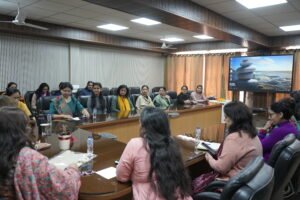
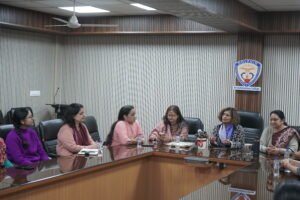
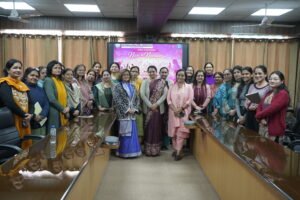
On 2 March 2026, The Women Empowerment Cell of Dolphin (PG) Institute of Biomedical and Natural Sciences, Dehradun successfully organised a Panel Discussion on the occasion of National Convention of Women Thought Leaders on the theme “Bharati–Nari to Narayani”, with the objective of highlighting the transformative role of women in knowledge, leadership, self-reliance, sustainability, and nation-building.
The convention provided a vibrant academic and intellectual platform for women leaders from diverse fields to deliberate on contemporary issues related to women empowerment in higher education and society.
Prof. Reema Pant, Educator, and environmentalist was the chairperson of the event. While the Dr. Shailja Pant, Principal, Dr. Shruti Sharma, Coordinator, IQAC, Prof. Versha Parcha, Dean, Research, Dr. Beena Joshi Bhatt, Chairperson, Women Empowerment Cell, Dr. Himani Dangwal, Dr. Kanika Issar, Members, Women Empowerment Cell, Dr. Deptee Warikoo, Dr. Sandhya Goswami, Dr. Rashmi Chauhan, Dr. Aditi Chauhan and other faculty members and staff were the other member of the panel.
A key highlight of the event was the panel discussion titled “From Bharati to Narayani: Women as Knowledge Leaders and Nation Builders”, which witnessed insightful deliberations on themes such as Knowledge as Power, Atmanirbharata (Self-Reliance), Liberating Self, The She Energy, Nature to Nurture, Strengthening the Roots, Stories of Success, and Plan of Action.
Eminent women academicians, researchers and environmental experts shared their experiences and perspectives, emphasizing the importance of education, leadership, innovation, and value-based learning in empowering women. The speakers highlighted women’s contributions as custodians of knowledge, drivers of sustainable development, and agents of social transformation.
The deliberations culminated in a set of policy-oriented recommendations to be submitted to the University Grants Commission (UGC), focusing on curriculum reforms, women-led research and innovation, entrepreneurship development, leadership opportunities, mental well-being, and environmental responsibility.
The programme witnessed enthusiastic participation from faculty members, students, and members of the academic community. The event reinforced the role of the Women Empowerment Cell in fostering gender equity, leadership, and inclusive growth within higher education institutions.
The convention concluded with a renewed commitment to strengthen women-centric initiatives and to nurture empowered, confident, and socially responsible women leaders for the future.



 Apply Now
 Fee Payment
 Admission
 Enquiry
 Quick Links